How to Tack and Jibe Safely in Heavy Wind
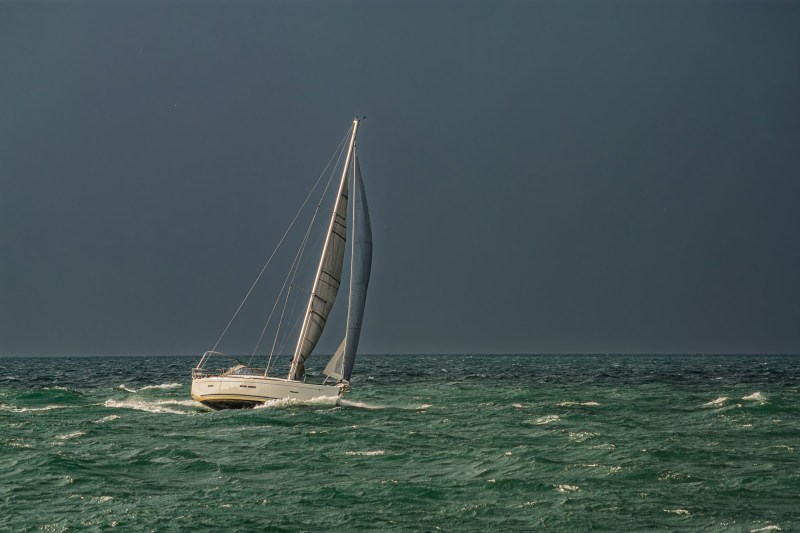 In challenging conditions, preparation and clear communication make every tack and jibe safer.
David Hutchinson/stock.adobe.com
Sailing in strong wind can be challenging, yet great fun if safety procedures for crisp maneuvers are carefully executed. Often, a crew will include veteran sailors along with some novices who might be intimidated in strong wind and choppy seas. Successful maneuvering begins with clear communication and assigning each person a specific duty. Preparation before any course change, tack or jibe is the key to making the maneuver run smoothly.
The helmsperson must maintain a controlled course through the maneuver while watching the wind gusts on the water and waves. Giving clear guidance to the sail trimmers makes tacking and jibing easier and safer. Steering in big waves is fatiguing and requires the person at the helm to be clearheaded with no other job other than steering. A second person should keep a careful watch and serve as the eyes outside the boat. On race boats, the helmsperson and the tactician work in tandem.
TackingThe first step is to alert the crew that the boat is going to make a tack. Sailors don’t like surprises. Make sure the jib sheets are clear and ready to be cast off the winch, and the new jib sheet is ready to be trimmed.
The tactician (lookout) watches for a smooth spot in the waves and counts down to the turn. The helmsperson should declare that the wheel or tiller is being turned when the tack begins. Everyone knows when the helm is being adjusted.
When the boat is heading straight into the wind, the boat will be upright. This is the moment for the crew to switch sides of the boat. The crew should be quiet and stay low so the others can hear the commands.
The helmsman should alter the rate of turning in three stages. First, slowly turn the boat into the wind. The faster the turn, the more the boat will slow down. Cast the jib off the winch just before the sail backs. Backing a jib will dramatically slow a boat and cause it to take more time to accelerate back up to full speed. The rate of turn should be increased as the boat passes through the wind.
As the sails fill on the new course, head the bow slightly low-of-course with the sails eased out a few inches to help generate speed. When back to full speed, trim the sails all the way in and resume the windward course. Most keelboats can make a tacking maneuver and regain speed in about 45 seconds.
When the turn is complete, I like to look back at the wake coming off the stern. If I see a gradual curve, it indicates the turn was smooth. If the wake takes the shape of a question mark, it indicates that the turn was made too quickly. Most boats will lose one or two boat lengths of distance every time a tack is made. One of the biggest mistakes is not having the jib sheet ready to be eased during a tack. Make sure the line is coiled and ready to go. The sail trimmer should continue feeding out the jib sheet until the sail is all the way around to the other side of the boat.
In very heavy wind, a useful technique is to alter course by “wearing” or jibing instead of tacking. This was the technique of large sailing vessels that had trouble turning through the wind in big seas. The remedy was to bear off, then jibe and come back up onto the desired course on the opposite tack. In this case, the jibe becomes the next maneuver to do carefully.
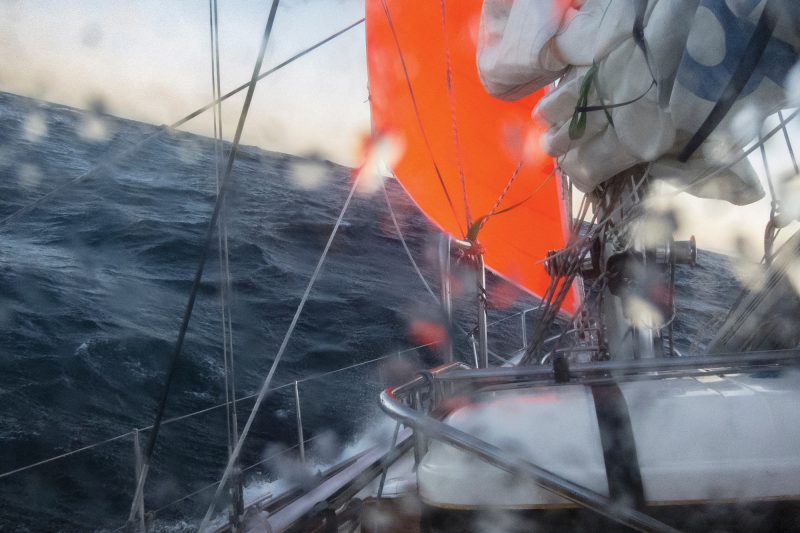 The helmsperson steers; everyone else has one job. Surprises are the enemy of a smooth maneuver.
Uwe/stock.adobe.com
Jibing
Changing course when sailing with the wind also needs to be done with great care in a stiff breeze. An early warning of the upcoming maneuver is essential. Again, crews don’t like surprises. Make sure the crew is warned to keep heads down when the mainsail boom passes across the boat.
The best time to jibe is when the boat is sailing at full speed and the apparent wind is lower because the boat is sailing fast. (If the boat is sailing at 8 knots and the wind is blowing at 20 knots, the apparent wind will be 12 knots.) I recommend easing the tension on the boom vang during a jibe to reduce the pressure on the boom and rig.
An S jibe is my favorite technique for reducing pressure on the rig. The helmsperson turns the boat toward the new course. Just as the boom starts to fly across the boat, steer back in the opposite direction about 20 degrees. This will slow the rate of the mainsail and boom swinging across. Once the mainsail crosses and is set on the leeward side, steer back onto the desired course. The mainsail trimmer should trim the main sheet in as the boat turns so the sail and boom don’t fly across the boat dangerously.
The course steered will be in the shape of an S. Practice this maneuver on a light-wind day. It is important for the helmsperson to sail a precise course and not oversteer. This is when a boat can get out of control and spin out.
One of the best reference tools when maneuvering is the masthead fly. It gives you an instant read of the apparent wind angle. A quick glance at the top of the mast will help you determine where the boat’s course is relative to the wind.
Changing CourseAltering course requires several adjustments. As with tacking and jibing, it is important to give the crew an early warning that the boat’s course is going to change.
Sails need to be adjusted and will help the boat turn onto the new direction. If the boat needs to bear away from the wind, the sails need to be eased. It is easier to steer if the sails are let out just ahead of the helm being adjusted. An over-trimmed boat will heel dramatically and is dangerous for the crew on deck or down below.
When heading up, the boat should be turned slowly, allowing time for the trimmers to bring the sails in. If the sails are too tight early in the turn, it will take more helm and slow the boat down, and cause over-heeling.
Sailboats are easily overpowered in strong winds. On a breezy day, take a reef in the mainsail. Secure the sail on the boom neatly so it is ready to be hoisted when the wind lightens. Also move the jib car aft to open the upper leech of the sail. This spills some of the wind and reduces heeling. And keep the crew weight to windward and in the center of the boat.
More tips for such days include allowing the headsail to luff a little to keep the boat on its feet (an even keel). Over-heeling slows the boat down and makes it difficult to control. When sailing downwind in a heavy blow and the boat is heavily rolling, sail a higher course of 10 to 15 degrees. The rolling will stop. Take a few turns on the roller-furler headsail to reduce the sail area.
The post How to Tack and Jibe Safely in Heavy Wind appeared first on Cruising World.