Five Keys for Selecting the Right Boat Engine
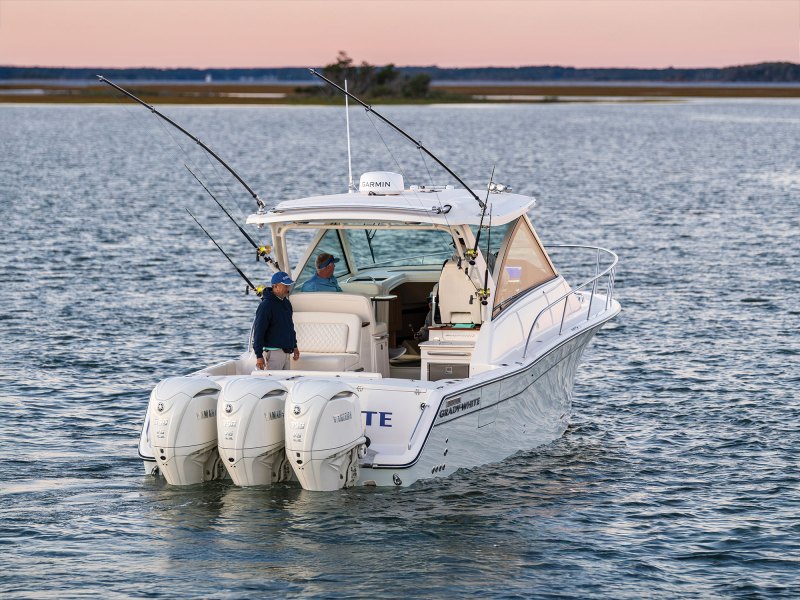 Multiple engines can provide another layer of security on the water.
Courtesy Grady-White Boats
Multiple engines can provide another layer of security on the water.
Courtesy Grady-White Boats
In shopping for marine power, whether selecting options for a new boat, or repowering an older boat, fuel consumption and speed tend to dominate the conversation. These are important points, no doubt. But there are other considerations boat or engine buyers should focus on in addition to those related to rpm. What are these things and how important are they to you? Read on to learn more.
Standard FeaturesI recently tested a boat that was offered with a choice of a larger single outboard, or twin outboards with equivalent horsepower. The single was from a completely different line from the same engine maker and included standard features, such as upgraded steering, that were optional on the smaller twins. This is a good example to start off with because it shows that the choice of power can be more than just about horsepower.
Dealer AccessSome boatbuilders offer a variety of engine brands. Others offer just one choice of power. It’s not so much that any one engine is bad—I’ve clocked 40 years covering the marine industry, and I can say that marine power has never been more reliable. But having a choice in power gives the buyer a broader selection of dealers. And, folks, if you’re not shopping for a dealer as hard as you are for a boat, you are doing it wrong.
MaintenanceMore engines means more maintenance. Concern for this will, naturally, vary with your position on the economic spectrum. Simply multiply the number of spark plugs, the gallons of oil, the filter and more by the number of engines. I’ll also note that it can be about more than money. For example, a single-engine boat on a cruise away from home may hit a rock and need to replace one prop. A multiengine boat hitting the same rock may need multiple props, which are all less likely to be in stock at any given time.
Read Next: The Evolution of Outboard Engines
Redundant ReliabilityIn the maintenance scenario above it could also happen that the multiengine boat hits the rock and only takes out one prop. This boat can then continue on its own power whereas the single-engine boat will be calling for a tow. This a good example of why I termed these points as considerations at the start; hard and fast rules are scarce when it comes to boats. In any event, despite high reliability, despite higher purchase price, and despite a lack of guarantees during mishaps, multiple engines do provide another layer of security on the water.
Weight and DrainageMultiple engines weigh more than a single engine, which affects trailerability. This applies more to smaller boats as engine weight represents a smaller percentage of a larger boat’s overall weight. More weight can also lower the boat’s scuppers, reducing the boat’s ability to self-bail. Notably, single-engine repower buyers can experience this if replacing an older, lighter two-stroke outboard with a newer, heavier four-stroke. Before removing your old engine, place buckets of water equaling the weight difference in the stern of Mom’s Mink II to see how it floats with the load.
The post Five Keys for Selecting the Right Boat Engine appeared first on Boating Mag.