Electric Reels and Equipment for Deep-Dropping
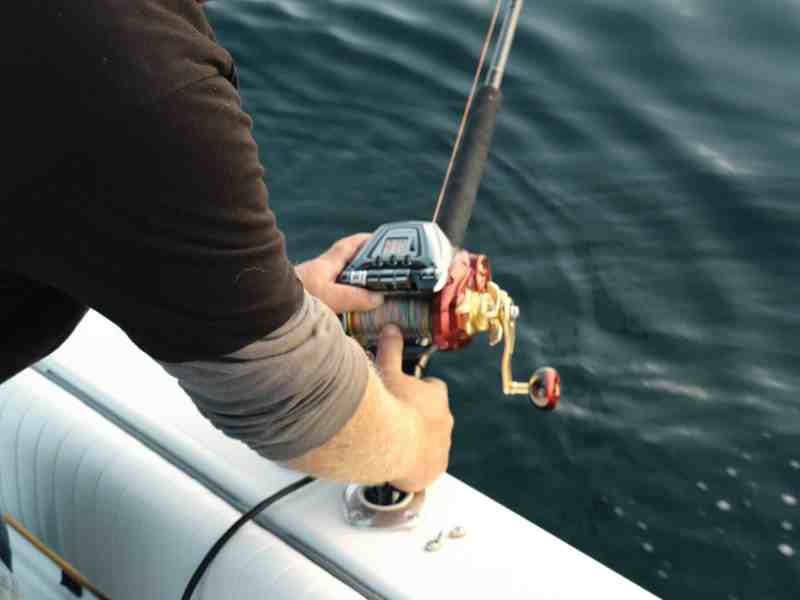 Electric reels make deep-dropping easier.
Jim Hendricks
Electric reels make deep-dropping easier.
Jim Hendricks
Today’s electric reels are tools that make seemingly impossible jobs possible—or at least, a lot more user-friendly and less back-breaking than hand-cranking. “I’m not f&#@ing doing that again,” is a phrase I’ve heard more than once after fishing buddies reeled up by hand heavy sinkers from more than 1,200 feet down.
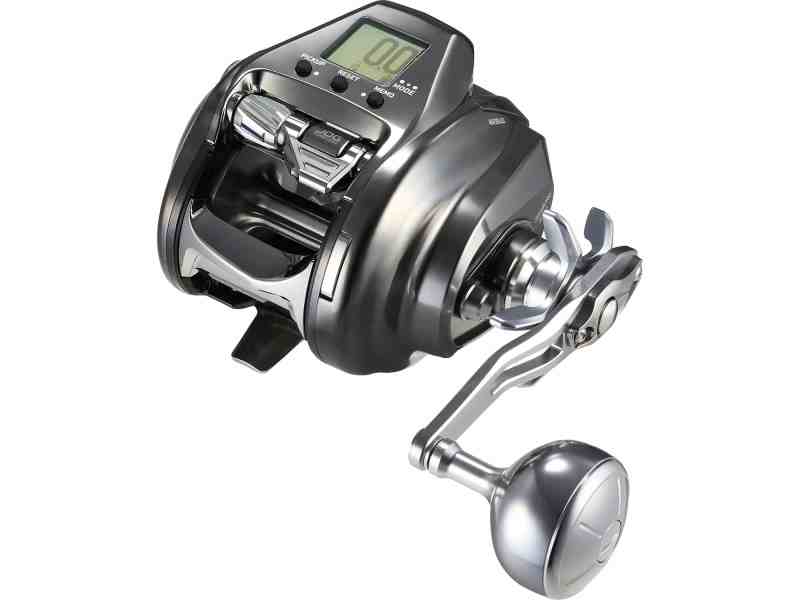 Electric reels like Daiwa’s Seaborg 500 come with power cords.
Courtesy Daiwa
BUY NOW
Electric reels like Daiwa’s Seaborg 500 come with power cords.
Courtesy Daiwa
BUY NOW
Electric reels from brands such as Daiwa, Hooker, Miya Epoch, Penn, Lindgren-Pitman, and Shimano eliminate the sore muscles, aching joints and streams of expletives wrought by hand cranking. But these increasingly popular types of reels do need power—largely in form of 12 to 24 or more volts of direct current, aka DC—and a means of reliably and safely delivering the electricity that traditional reels do not require. This was a major factor I needed to consider when I first decided to use electric reels for daytime swordfishing and deep-dropping aboard my boat.
Let’s look at some of the electrical-related elements needed to fish with the new breed of electric reels, be it for deep-dropping, swordfishing or kite fishing.
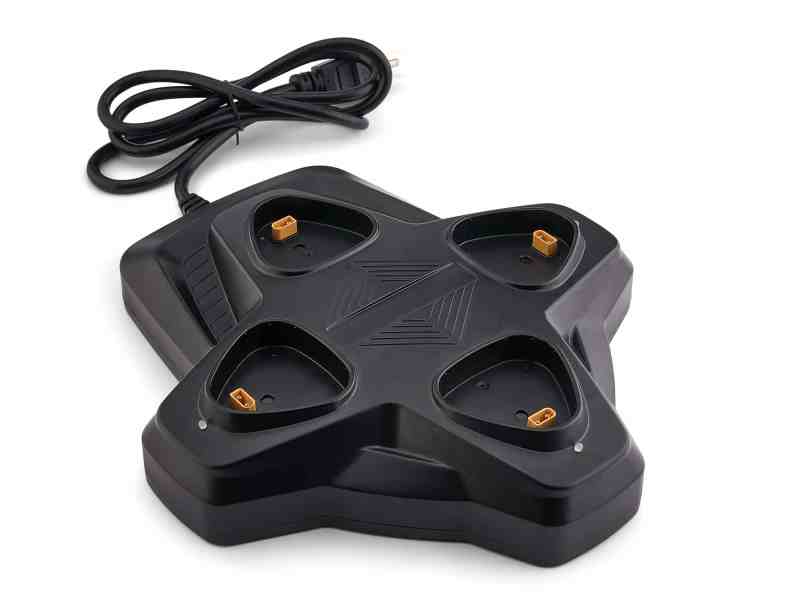 Chargers are a must if you use portable batteries.
Courtesy Penn
BUY NOW
Power Cords
Chargers are a must if you use portable batteries.
Courtesy Penn
BUY NOW
Power Cords
Most electric reels include a power cord as standard equipment with the purchase, allowing you to tap into an onboard battery bank, most often with a set of alligator clips on one end. There’s also a plug on the other end that connects to a port on the reel with a watertight locking mechanism. There is no uniform plug for the reel side of the cord, so make sure you have the right plug for your reel.
Power cords range from 8 ½ to 10 feet in length—usually plenty of length to reach an onboard battery or one that you might carry aboard the boat.
Should you damage, lose or want a spare power cord, you can order one from a tackle shop or online retailer that handles your brand of electric reel. There are also third-party sources for power cords, including BatPower (batpower.com) which offers cords in lengths up to 18 feet for Daiwa, Miya Epoch, Shimano and other electric reels. The longer cords prove handy if you need extra length to reach a power source.
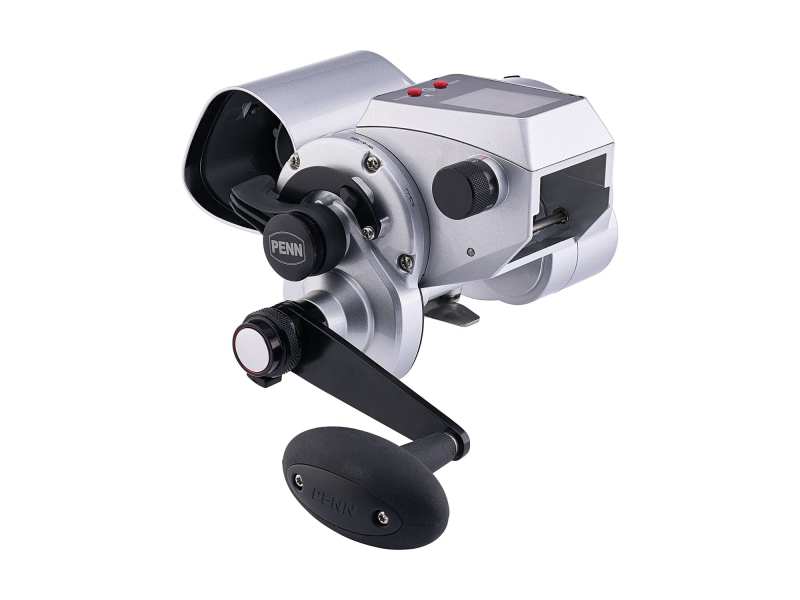 Penn’s Fathom Electric reels incorporate rechargeable battery systems.
Courtesy Penn
BUY NOW
Penn’s Fathom Electric reels incorporate rechargeable battery systems.
Courtesy Penn
BUY NOW
One brand of electric reel does not come standard with a power cord. Penn Fathom Electric models don’t necessarily need cords because the reels come incorporated with rechargeable batteries. However, Penn does offer a series of power cords integrated into modified plug-in batteries, allowing you to fish with onboard power. These 10-foot cords are good items to have when fishing with Fathom Electric reels in case the built-in battery runs low and you forgot to bring a fully charged spare.
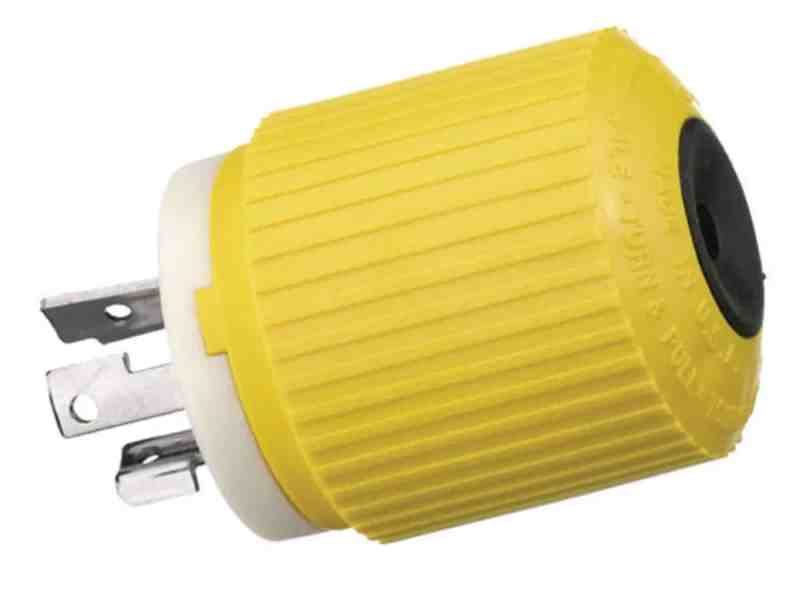 Installing a plug on your power cord lets you conveniently connect to pre-installed power outlets.
Courtesy Hubbell
BUY NOW
Outlets and Plugs
Installing a plug on your power cord lets you conveniently connect to pre-installed power outlets.
Courtesy Hubbell
BUY NOW
Outlets and Plugs
Connecting a power cord directly to an onboard battery tucked deep in a dark bilge or other compartment can be a hassle. Secondly, alligator clips do not offer the most secure electrical connection. For this reason, many boating anglers equip their boats with marine-grade receptacles in the cockpit where much of the fishing takes place. With center consoles, receptacles in the bow area serve the needs of kite-fishermen—who use electric reels to deploy and retrieve high-flying kites.
One of the most popular receptacles for boating anglers is the Hubbell receptacle (HBL328DCR). Priced around $50, it’s applicable for nearly all 12-, 24-, and 32-volt DC electric fishing reel systems. Rated at 28 volts DC, the high-visibility yellow nylon marine-grade outlet features a three-prong twist-lock face with nickel-plated contacts for corrosion resistance. Easy to wire to a DC onboard power source and often installed under gunwale caps, it is available with matching marine-grade boxes and wall-plates with sealed covers to keep salt water at bay. It can also be used to power downriggers and electric trolling motors.
Very importantly, this receptacle can be paired with the Hubbell twist-and-lock plug (HBL328DCP) for electric reel power cords. Retailing for about $40, this yellow marine-grade plug is designed to replace the alligator clips on the end of power cords for 12-, 24- and 32-volt DC electric reel systems. The plug disassembles for installing the wire leads inside, then reassembles to create a watertight seal.
Anglers might also consider the Marinco ConnectPro receptacle and plug (about $50). While not quite as robust as the Hubbell system and designed only for 12-volt reels, the Marinco system is more affordable and the outlet is easier to install, provided you can route extension wires to an onboard power source and there is an accessible mounting surface that is not exposed to saltwater spray on the backside. The receptacle comes with a cover to protect the outlet when not in use.
Marinco’s Connect Pro matching plug easily installs once you cut off the alligator clips on a standard two-wire power cord. The two-prong plug secures with a twist-lock connection in the Connect Pro outlet. You can also use this system to power electric downriggers and crab-pot haulers.
Finally, with any electrical outlet or wiring installed aboard your boat, make sure the circuit and components are properly fused and all connections are tight, corrosion resistant, and as waterproof as possible.
Read Next: How to Choose and Use an Electric Fishing Reel
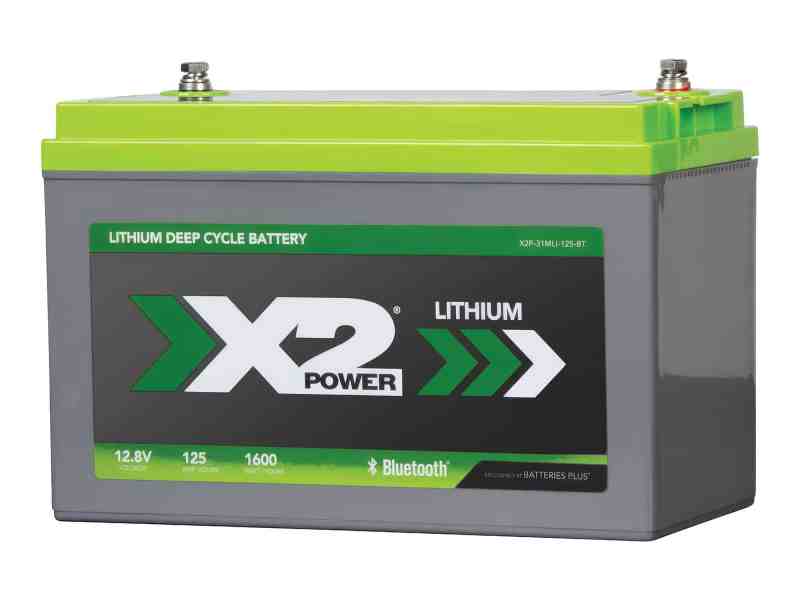 Lithium house batteries offer greater onboard capacity.
Courtesy X2 Power
Portable Batteries
Lithium house batteries offer greater onboard capacity.
Courtesy X2 Power
Portable Batteries
A number of anglers use compact and lightweight portable lithium 12-volt batteries to power their electric reels. These are largely available from third-party companies with optional accessories such as shorter power cords, chargers, and belts and harnesses to conveniently carry the battery while fishing. There are also options to strap the battery to the fishing rod. Some lithiums are so small and lightweight that you can use the reel’s locking electrical plug alone to secure the battery.
Portable lithium batteries are a good choice if you don’t want to install electric receptacles on your boat or you fish on a buddy’s boat that has no power outlets. If portable lithium batteries are appealing to you, buy 2 or 3 of them, so you have spares for a full day of deep-dropping. They range in price from about $140 to $300, excluding accessories.
If you want to bring these batteries (or the Penn Fathom plug-in battery) up to full charge on your boat, think about an inverter. This device converts DC current to AC current, which most battery chargers need to operate. Inverters like the ProMariner TruePower Plus (around $404) connect to a 12-volt DC power system and have AC household-style outlets for plugging in the appropriate charger. If your boat is equipped with a 120-volt AC electrical system powered by an onboard generator, you might not need an inverter.
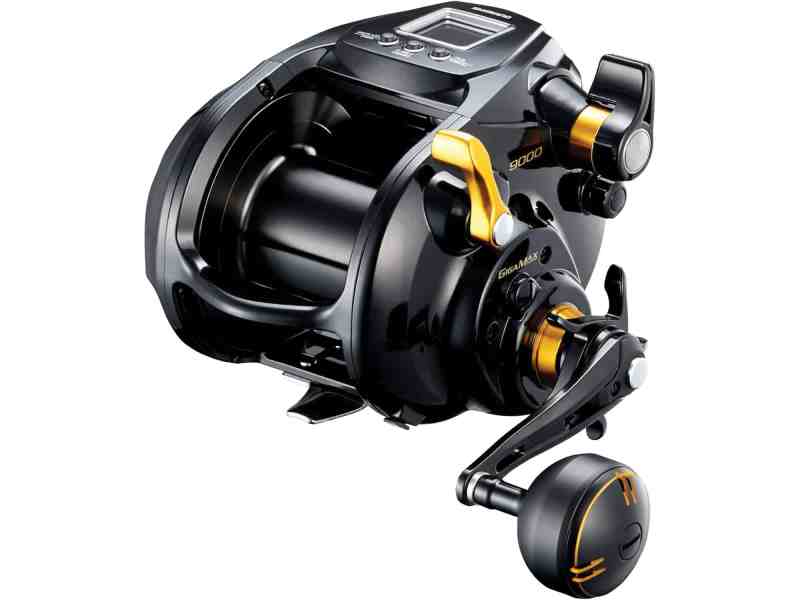 Shimano’s Beastmaster 9000 is compatible with 12- volt DC onboard systems.
Courtesy Shimano
BUY NOW
Battery Management
Shimano’s Beastmaster 9000 is compatible with 12- volt DC onboard systems.
Courtesy Shimano
BUY NOW
Battery Management
When using your boat’s battery system for electric reels, be very cognizant of battery management. Avoid using your boat’s cranking battery bank, as prudent seamanship dictates that you reserve these for starting the engine—a top safety priority. Instead, use the boat’s house battery bank, but at the same time make sure there’s sufficient amp hours for all vital onboard accessories. Electric reels do not draw an excessive amount of power. But, if in doubt about battery load, keep the main engines idling while operating electric reels to maintain the house battery bank at a sufficient level.
The post Electric Reels and Equipment for Deep-Dropping appeared first on Salt Water Sportsman.