Maine to Nova Scotia: The Offshore Passage That Teaches You Everything
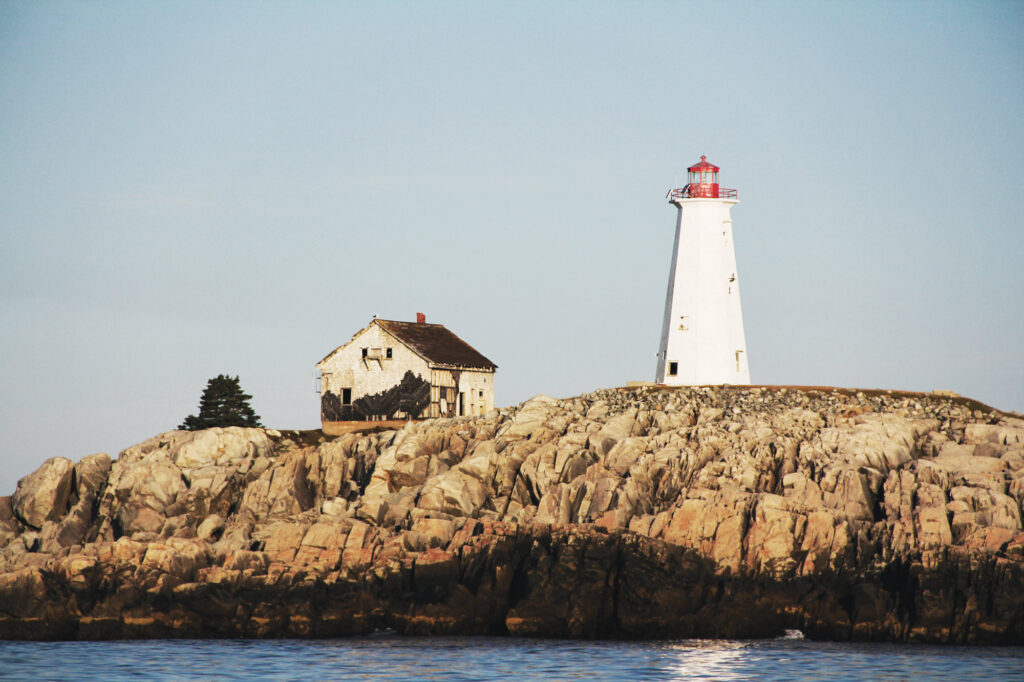 A lighthouse emerges from the rocky Nova Scotia coast.
Ben Eriksen Carey
A lighthouse emerges from the rocky Nova Scotia coast.
Ben Eriksen Carey
This is what it’s like to cross an ocean,” I said. The words hung in the salty air. With the wind at 15 knots just forward of the beam, we sailed under a reefed main and full jib, feeling Rocinante rise and fall with the gentle ocean swell. It was the 0300 watch change. The short offshore passage promised a taste of the true essence of a big crossing, only in bite-size.
We had departed Maine just 20 hours earlier, crossing the mouth of the Bay of Fundy, bound for Nova Scotia. I looked at the crew. It wasn’t the perfect breeze or a fresh cup of coffee that had them all smiles. Instead, it was that “aha moment” when they realized they could handle sailing beyond sight of land. They were managing watch changes, adapting to varied sleep schedules and tackling surprise squalls. Moments like this make my role as a sailing instructor truly rewarding, especially for a crew on their first crossing.
Earlier that year, on a snowy winter afternoon, I was scanning charts for a route that would provide a genuine passage experience on a tight timeline. I needed the ideal passage for a crew ready to stretch their sea legs and challenge themselves, but with only a week to spare. The passage from Maine to Nova Scotia was perfect.
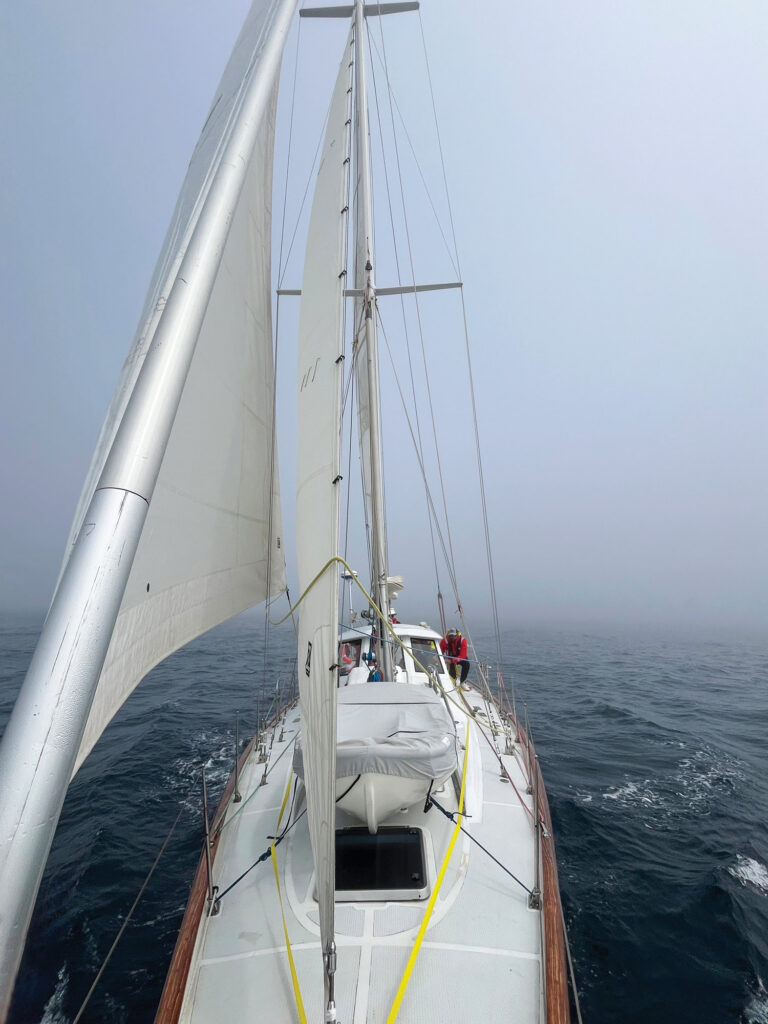 This short offshore run delivers the full passagemaking experience without a transoceanic leap.
Ben Eriksen Carey
This short offshore run delivers the full passagemaking experience without a transoceanic leap.
Ben Eriksen Carey
The coast of Maine and Canada extends to the northeast, with Nova Scotia lingering just off the shore, resembling an island. Setting out from Rockland, we headed east across the Gulf of Maine toward Cape Sable, the southernmost tip of Nova Scotia. This stage marked a commitment: It’s the moment when you leave familiar land behind and venture into open waters.
The summer winds typically blow from the southwest, offering a good angle for our approach to Nova Scotia. We set our sights on Cape Sable, a distance of 135 miles, still well beyond our view as the rocky coast of Maine faded into the horizon. Once we rounded Cape Sable, we would turn northeast and begin following the coast toward Halifax, keeping the shoreline 10 miles off our port side.
Throughout this leg of the passage, land remained visible on clear days, providing a comforting backdrop. However, even with the coast in sight, the weather and swells that rocked us originated from the open Atlantic, a reminder of the sea’s power.
 Hot meals boost morale on watch.
Ben Eriksen Carey
Hot meals boost morale on watch.
Ben Eriksen Carey
And the return passage builds in more challenges, gradually. By budgeting two extra days for the return trip, you can sail a long offshore stitch, heading due south into the open ocean, then tack back toward land on a comfortable close reach.
For many people, a first significant offshore passage is sailing from Florida to the Bahamas. That includes crossing the Gulf Stream and planning for the best weather window. But leaving Maine or Cape Cod and heading to Nova Scotia can be equally as exciting. Consider it the “Bahamas run of the North”—an overnight hop followed by some coastal sailing, planning for favorable wind and current when rounding the cape. About 125 to 225 nautical miles later, you’re in a foreign country.
At 0430, we had 25 miles to cover before reaching Cape Sable. It was still dark. The wind had picked up from the southeast, and a thick fog had rolled in. We adjusted our sails for a close-hauled course and decided to reef the jib. This helped to reduce our heel, ease the weather helm and keep water off the side decks. While heeling can be thrilling, we always aim to reef early to avoid taking on too many challenges at once. With fog, darkness and a freshening wind, it’s not a time to be overly proud.
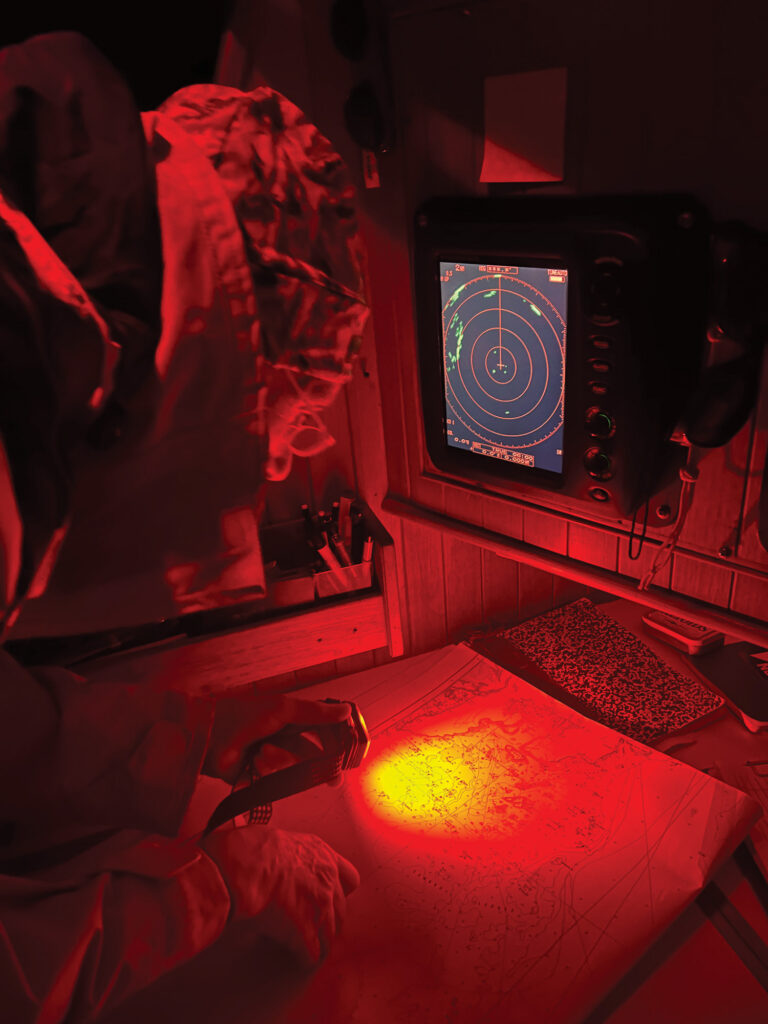 Radar helps sort real targets from clutter.
Ben Eriksen Carey
Radar helps sort real targets from clutter.
Ben Eriksen Carey
At 0600, we gathered in the cockpit for our routine discussion during the watch change. The watch boatswain recapped the recent boat check. He followed the checklist, which included things like making sure we weren’t wasting DC power, confirming the propane was off, and ensuring that everything was shipshape belowdecks. He also pointed out that the port forward dinghy lashing needed tightening, an issue best caught early rather than when the dinghy is bouncing around on deck.
The watch captain led the navigation briefing, pointing out five vessels on the AIS screen that had been “doing donuts” ahead—a classic sign of fishing boats. She also noted four targets on the radar. It was interesting to see discrepancies between the AIS and radar data, suggesting that not all targets were vessels, or that not all vessels were transmitting AIS.
Before I ducked below for some rest, I instructed the oncoming watch captain to monitor the AIS and radar closely, and to hail any vessel if the closest point of approach dropped below 1 mile for more than a minute. When one vessel’s closest point of approach dipped below 0.2 nautical miles with a time to closest point of approach of just five minutes, I attempted to hail them with no response. We altered our course significantly for a few minutes to increase our distance, then resumed our original course and passed safely well to the north of them.
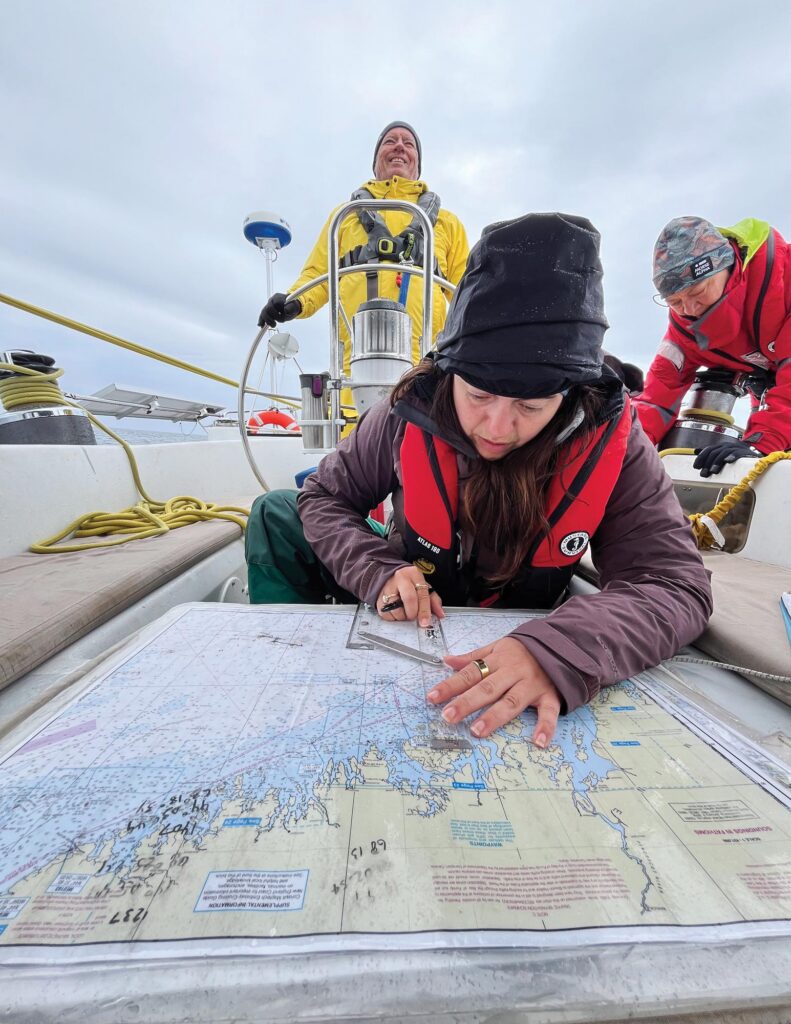 Keeping our triangulation skills sharp offshore.
Ben Eriksen Carey
Keeping our triangulation skills sharp offshore.
Ben Eriksen Carey
These routine tasks—conducting boat checks, monitoring traffic, snacking, catching some sleep, making coffee for your mates—are typical of life at sea. On a long ocean crossing, this calm and consistent routine can last for days. My students experienced this firsthand for a few days, getting a taste of the rhythm and responsibilities that come with passagemaking.
Rounding Cape Sable, we had favorable currents. Our careful calculations of wind and wave forecasts were paying off. All passages are challenging, but this run crosses the Bay of Fundy, which is known for 30-foot tides. Currents can reach 6 knots. If you time it right, you can enjoy a 10-knot ride as you slingshot your way around the cape. But failing to coordinate with the current means you’re better off going farther offshore to minimize the effects.
Even if your destination is Halifax or beyond, Cape Sable is a great place to bail out. We’ve stopped there before and made our way to Clark’s Harbour on Cape Sable Island. We tied up at the main dock among the fishing boats, a common sight in most Nova Scotia ports. Two fishermen kindly offered to drive us to the local market for water and provisions. We tried to pay them for their help, but they waved us off, saying in thick Nova Scotian accents, “Nothin’ to it, happy to do it.”
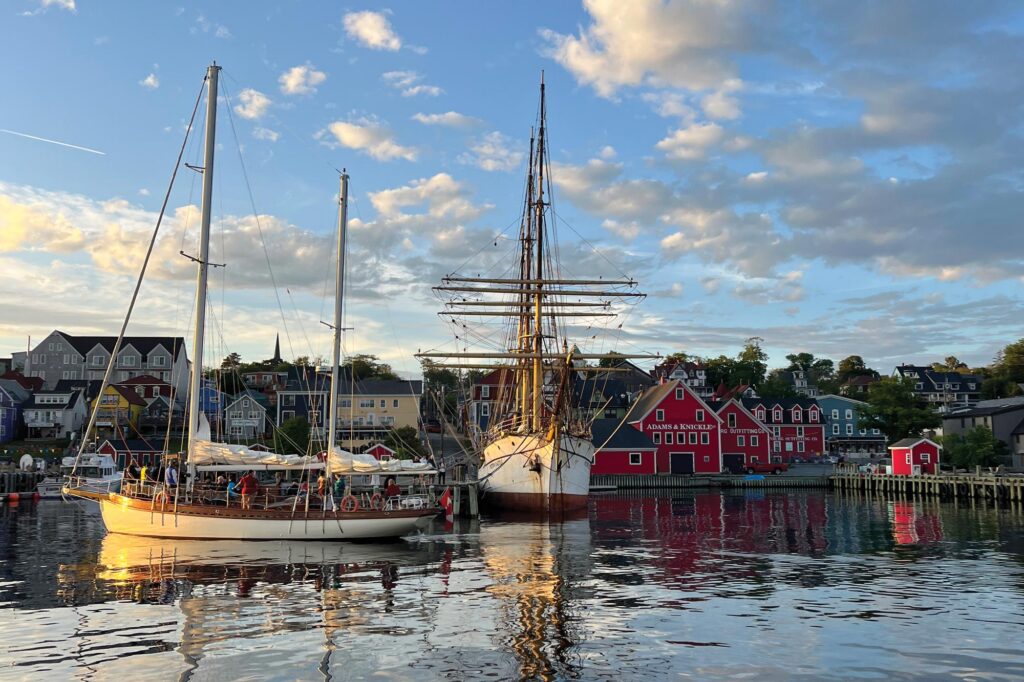 Historic Lunenburg Harbour welcomes arriving sailors.
Ben Eriksen Carey
Historic Lunenburg Harbour welcomes arriving sailors.
Ben Eriksen Carey
Lunenburg is another fantastic stop along Nova Scotia’s south shore. It’s a vibrant fishing village that feels like a living postcard. The colorful wooden houses, painted in bright hues, cling to the hillsides of Lunenburg Bay.
When entering Canada, vessels are required to call the Canada Border Services Agency. It’s best to check in advance for designated clearance docks and to tie up only at those spots. We learned that the hard way after we inadvertently docked at an unofficial location in Lunenburg. Fortunately, the friendly Canadian vibe and the lack of other cruising boats made customs quite flexible with us. After tying up at Zwicker Wharf for just $2 per foot, we provided our passport information over the phone and moved to the dock by the Fisheries Museum of the Atlantic to meet the customs officials. When we called back to confirm we were secured, they said, “You’re all set.”
Having practiced our docking skills three times in less than an hour, we laughed our way back to the wharf, ready to head ashore for some well-deserved treats.
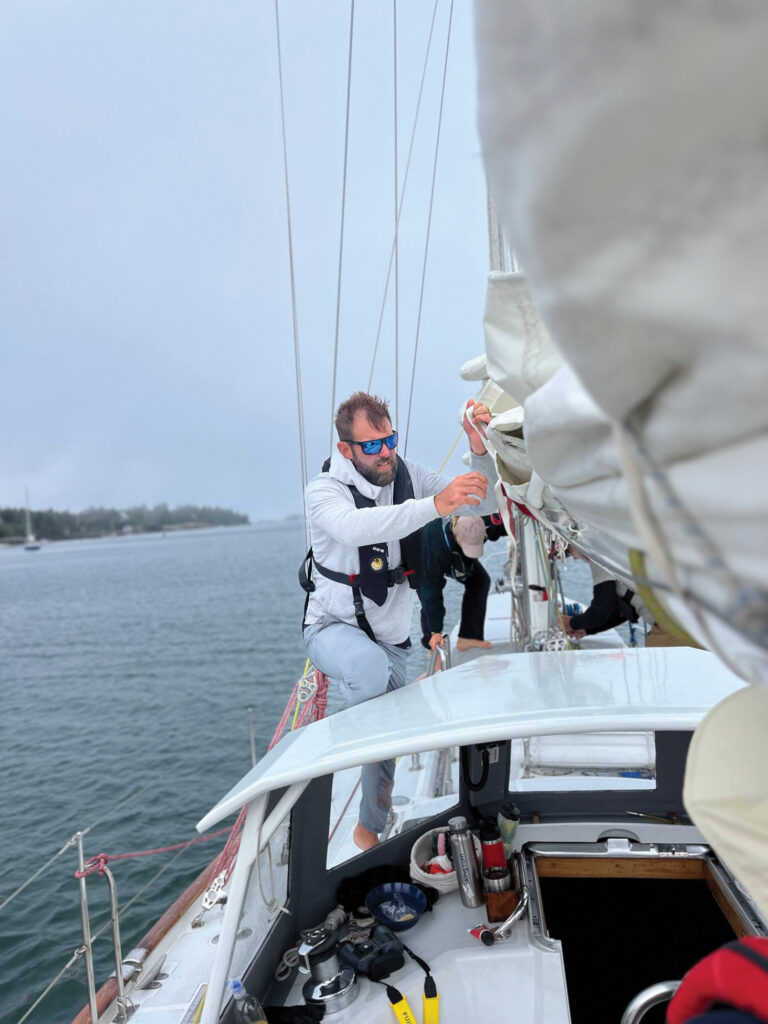 Prepping the mainsail as fog closes in.
Ben Eriksen Carey
Prepping the mainsail as fog closes in.
Ben Eriksen Carey
The salt air, fresh fish and brewing coffee filled my senses. We grabbed iced caramel lattés to satisfy our ongoing quest for the best coffee, and then we headed to The Boat Shop to check out the latest build. At the shop, you can take classes to build or restore wooden boats. Just a dock away is Picton Castle. This vessel was built in Wales in 1928 as a steam-powered fishing trawler. In the 1990s, she was transformed into a modern replica of a classic tall ship and used as a training vessel.
Heading east from Lunenburg is Mahone Bay. It’s a lovely spot with calm anchorages and just enough navigational quirks to keep things interesting. The region’s emphasis on craftsmanship in wooden boatbuilding, the bustling fishing boats, the rocky tidal landscape, and the active waterfront create a true maritime atmosphere. Often, there is barely another yacht in sight. This is the sailing experience I value most, the heart of the Northeast.
Ultimately, we were bound for Halifax. Like all adventures, this one eventually had to come to an end, and that meant finding an airport.
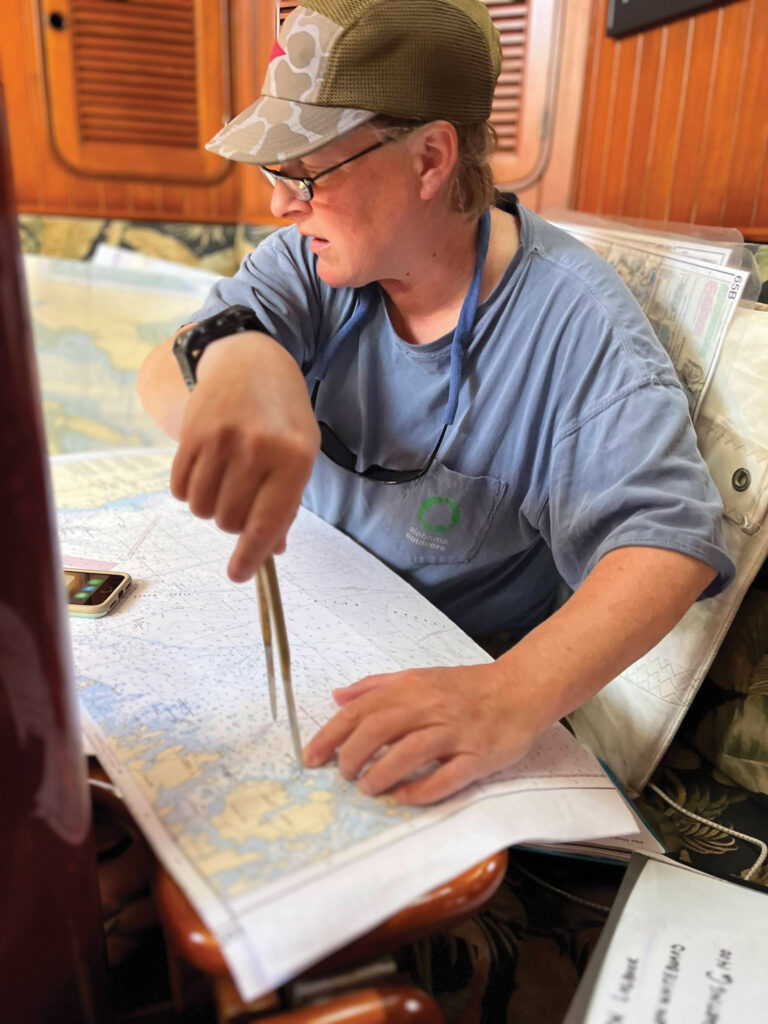 Careful passage planning underpins a successful run to Nova Scotia.
Ben Eriksen Carey
Careful passage planning underpins a successful run to Nova Scotia.
Ben Eriksen Carey
The 50-nautical-mile run from Lunenburg to Halifax was another foggy day. We sailed past Green Island in Mahone Bay toward Sambro Island. Approaching Sambro, we could hear the foghorn of the lighthouse guiding us through the mist. It’s important to leave Sambro Light well to port to stay clear of the rocks off West Head Point, even though there are small channels close to the headland (local fishermen navigate them in calm conditions).
As you enter the channel to Halifax, all vessels must check in with Halifax Traffic on Channel 12, where they’ll inform you of any inbound or outbound traffic. Halifax has transformed over the years into a metropolis full of cultural diversity. It has a fantastic waterfront boardwalk lined with restaurants, docks, vendors and street food. We enjoyed tying up right downtown at the Halifax Waterfront Marina. While it can be a bit bouncy with boat traffic and wakes, and there are no showers or laundry, being in the heart of the city is worth it, especially for a summer weekend.
The journey from Maine to Nova Scotia and the charming coastal towns along the way offer an unforgettable experience for cruisers. Watchkeeping under the stars, navigating the mouth of the Bay of Fundy, losing sight of land, and reaching the picturesque town of Lunenburg create memories that last a lifetime. While the challenges of strong currents and fishing traffic can be daunting, the rewards of careful planning and an adventurous spirit make it all worthwhile.
Ben Carey is the owner-operator of Morse Alpha Expeditions, a coastal and offshore sail-training program (morsealpha.com). He holds a 200-ton master license and has captained commercial boats from tugboats to schooners.
The post Maine to Nova Scotia: The Offshore Passage That Teaches You Everything appeared first on Cruising World.