Beneteau First 30: Built to Plane
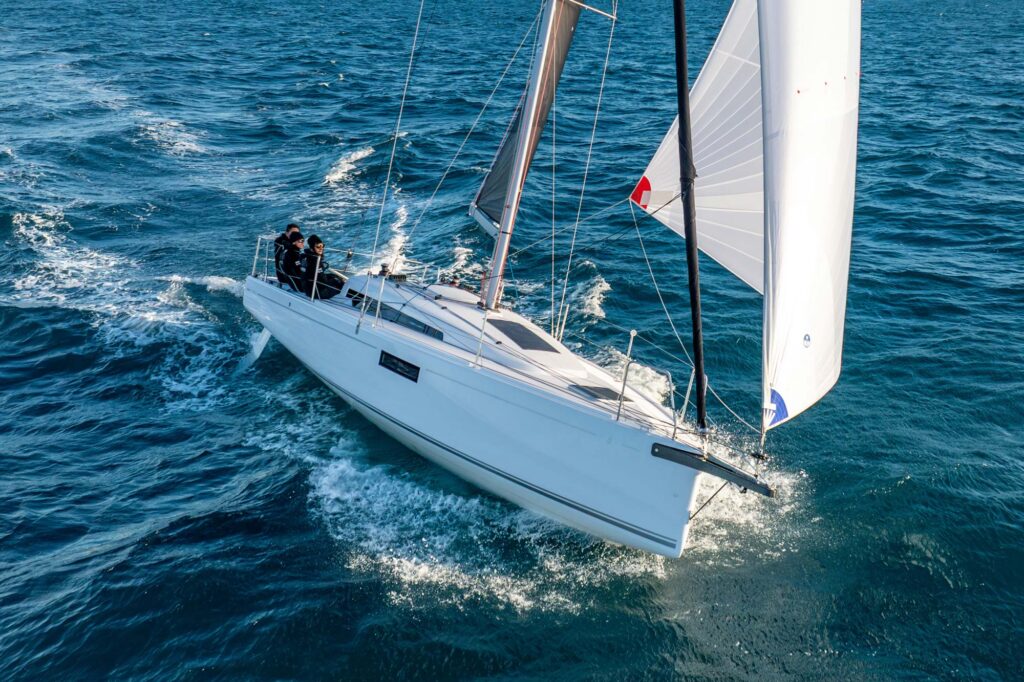 The First 30 lives up to its billing. Locked in at 12 knots, the helm goes light and the wake screams past that open transom.
Courtesy Beneteau
The First 30 lives up to its billing. Locked in at 12 knots, the helm goes light and the wake screams past that open transom.
Courtesy Beneteau
In the 2023 Boat of the Year contest, perhaps the most enjoyable electric sea trial in the entire competition took place aboard the Beneteau First 36. The versatile 36-footer was built in Slovenia and became part of Beneteau’s First series after the French builder acquired the former Seascape brand of performance-oriented racer/cruisers. It was such a great sail that we named the First 36 the year’s Best Sport Boat and presented it with the Judges’ Special Recognition prize. Our sister publication, Sailing World, was even more impressed, honoring it as their Overall Boat of the Year.
For 2026, Beneteau has introduced a smaller version, the First 30, also produced in Slovenia by the same team responsible for the 36: naval architect Samuel Manuard and interior designer Lorenzo Argento. Clearly, the diminutive sistership had a tough act to follow. It’s done so in admirable fashion, and is a worthy addition to the First family.
In profile and aesthetically, the First 30 is a scaled-down version of its 36-foot sibling. There’s a fixed bowsprit forward; a low-slung coachroof; a spacious cockpit to facilitate quick, efficient tacks and jibes; and an open transom. The twin foam-cored rudders (the same foils that drive Class 40 racers) are coupled to a simple tiller, and provide immediate feedback for skippers steering the boat. Our test boat was equipped with the standard cast-iron keel with a lead ballast bulb weighing nearly 500 pounds that draws 6 feet 2 inches (a shoal-draft version is also available). The fine sail inventory, set off a double-spreader rig, is courtesy of North Sails, while Garmin provides the instrumentation.
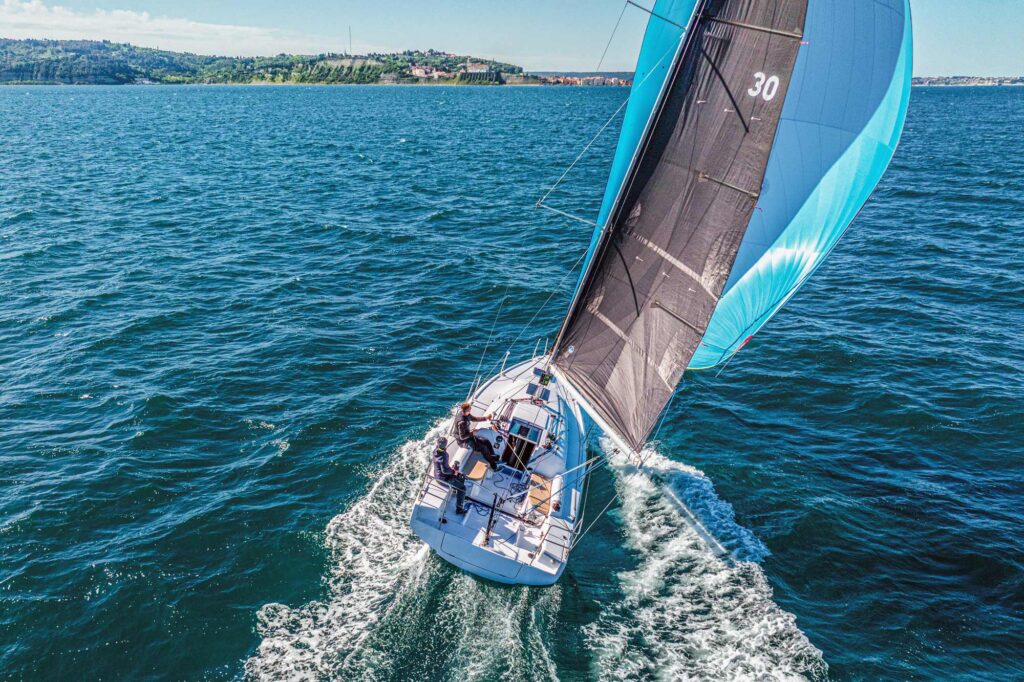 The First 30 planes readily, carves turns like a downhill skier, and has topped 19 knots in the hands of its most enthusiastic ambassador.
Courtesy Beneteau
The First 30 planes readily, carves turns like a downhill skier, and has topped 19 knots in the hands of its most enthusiastic ambassador.
Courtesy Beneteau
Down below, the accommodations are straightforward and inviting, and certainly more than capable for comfortable coastal cruising. (I once owned a J/30 and can testify that you can sail far and wide on a 30-foot platform.) There’s an enclosed stateroom with a V-berth forward (notably, the same size as the First 36’s) and an open salon with long settees flanking a central drop-down dining table. The settee cushions can be folded back to provide good sea berths. A useful galley with a gimballed two-burner stove is to port, opposite an enclosed head with a shower to starboard. A double berth far aft is tucked under the cockpit. Every bit of available interior space is put to excellent use.
Light boats are quick boats, and the First 30 is one of the lightest production sailboats currently on the market, displacing just over 6,700 pounds. The vacuum-infused laminate employs a vinylester/polyester outer skin sandwiching a PVC-foam core, with plywood bulkheads. No less than 17 separate molds are used in assembling the entire vessel. Auxiliary power is provided by a 14-hp Yanmar diesel with sail drive; during our sea trials, it scooted us along at over 6 knots at 2,500 rpm. Fully tricked out, our test ride came in at just about $200,000. Perhaps as a sign of the times, it was the least expensive nominee in the entire 2026 Boat of the Year fleet.
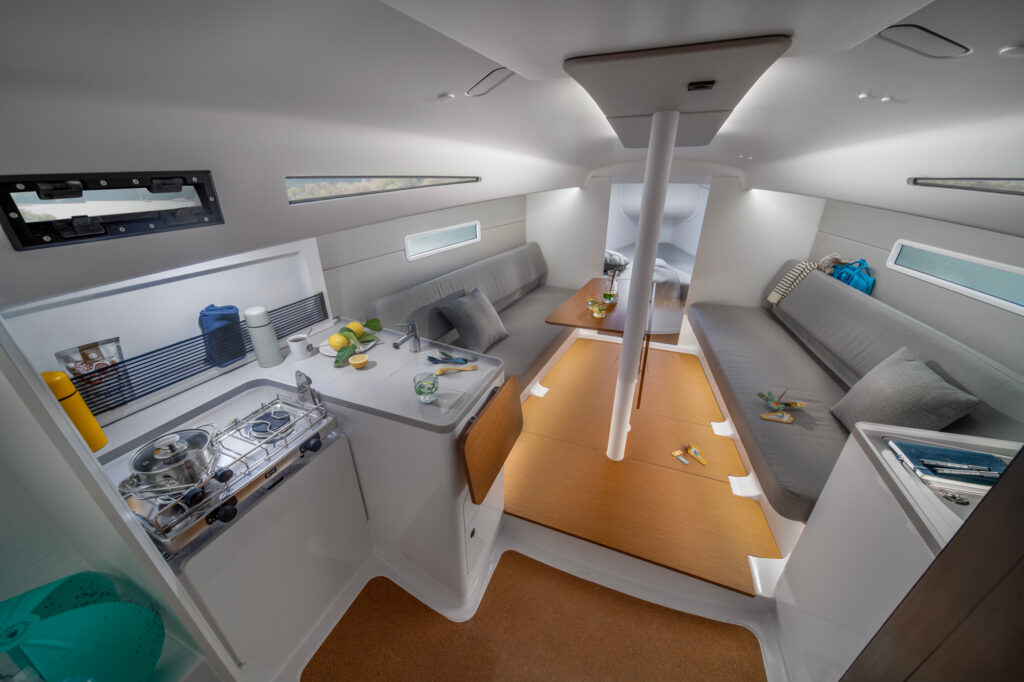 The forward V-berth stateroom is the same size as the First 36’s—a notable achievement on a 30-foot platform that displaces just over 6,700 pounds.
Courtesy Beneteau
The forward V-berth stateroom is the same size as the First 36’s—a notable achievement on a 30-foot platform that displaces just over 6,700 pounds.
Courtesy Beneteau
All this, however, was in the service of outstanding sail performance, which Beneteau is not shy about promoting. The marketing material is all about “the joy of planing.” To its credit, the First 30 backs it up.
The face of the First performance brand is a young, talented Slovenian sailor called Tit Plevnik, and his own joy of sailing is infectious. Once we’d had a good inspection of the deck layout and accommodations, he was eager to hoist sail and put the boat through its paces (the boat’s top speed so far, he said, was an impressive 19 knots). We couldn’t have had a better, more enthusiastic tour guide.
Upwind, especially considering its waterline length, the boat leaned into the breeze and trucked right along sweetly at 6-plus knots. But to plane, you’ve got to turn and burn. Luckily, we had a sweet Chesapeake Bay breeze in the lower double digits to do so. So we stashed the headsail, hoisted a kite and got down to business. And the First 30 lit us up.
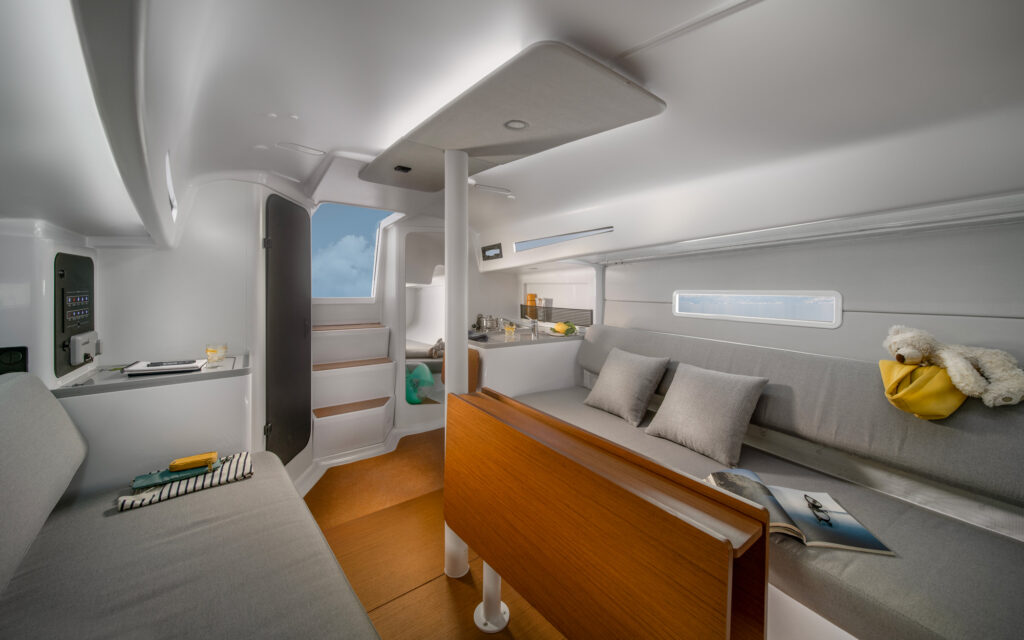 Every inch earns its place below: long settees, a gimballed two-burner galley, an enclosed head with shower, and a double berth aft make the First 30 as capable coastally as it is exhilarating offshore.
Courtesy Beneteau
Every inch earns its place below: long settees, a gimballed two-burner galley, an enclosed head with shower, and a double berth aft make the First 30 as capable coastally as it is exhilarating offshore.
Courtesy Beneteau
Driving the boat off the breeze was nothing less than a blast. The speedo just kept rising: 8 knots. Nine. Ten. Locked in at 12 knots, the helm became light, effortless and super responsive to the lightest touch. The sensation of the wake scooting rapidly past that open transom was a sight to behold. In the puffs and lulls, chasing the wind, I could carve turns like a downhill skier. And yes indeed, she planes alright. It was quite the ride.
At the end of the day, the First 30’s stated objective is pretty simple: Have fun. I’m here to say it has met that objective.
The post Beneteau First 30: Built to Plane appeared first on Cruising World.